STADIUM WATER CONTROL

KEEP WATER MOVING. KEEP VENUES READY.

We work alongside venue teams on the unglamorous part of match day: the channels, gullies, gradients and access points that move surface water away from pitches, concourses and hardstanding. Specialist drainage planning, inspection, maintenance and repair can help a venue understand its drainage infrastructure and keep it working the way it was intended to.

Drainage work supports water management — it cannot guarantee that an event proceeds, prevent flooding in every circumstance, or remove weather-related disruption. Requirements vary by project.

  • Perimeter channelsIllustrative marker
  • Pitch surface zoneIllustrative marker
  • Collection pointsIllustrative marker
  • Access coversIllustrative marker

The graphic above is a stylised visual illustration of venue drainage concepts. It is not an engineering drawing and does not represent any specific venue.

SERVICE INDEX

Five areas of stadium drainage support

Every venue is different — a compact training ground and a large multi-tier bowl have very different surface-water challenges. These five areas describe how we usually break the work down, and each one links to a fuller explanation of what it involves.

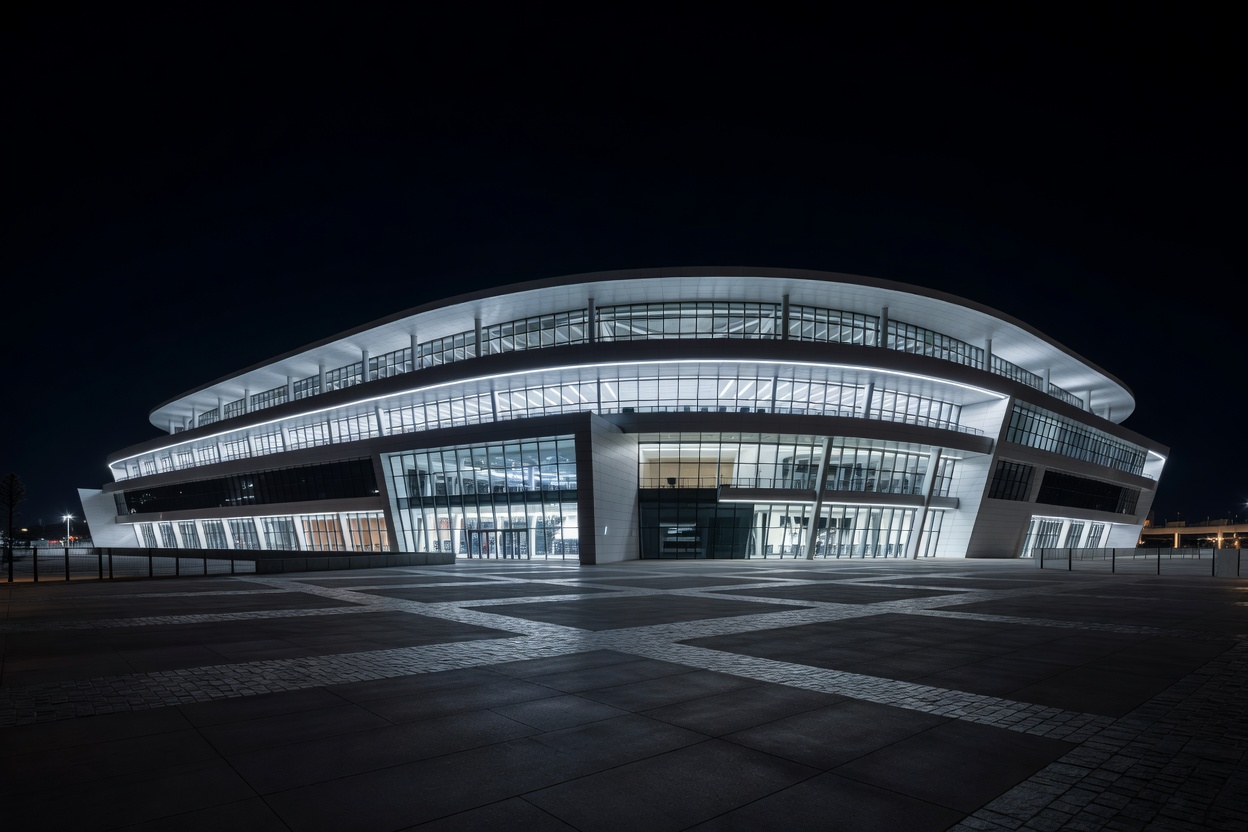
Night-time view of a modern stadium exterior with illuminated concourse levels and paved approach areas

01

Stadium Drainage Design

Planning where surface water should go before anyone digs. We look at drainage routes, pitch and perimeter drainage, hardstanding, entrances and how an existing system is actually performing.

  • Surface-water routes and collection
  • Pitch, perimeter and hardstanding areas
  • Existing-system assessment
  • Venue-specific planning input
Stadium Drainage Design
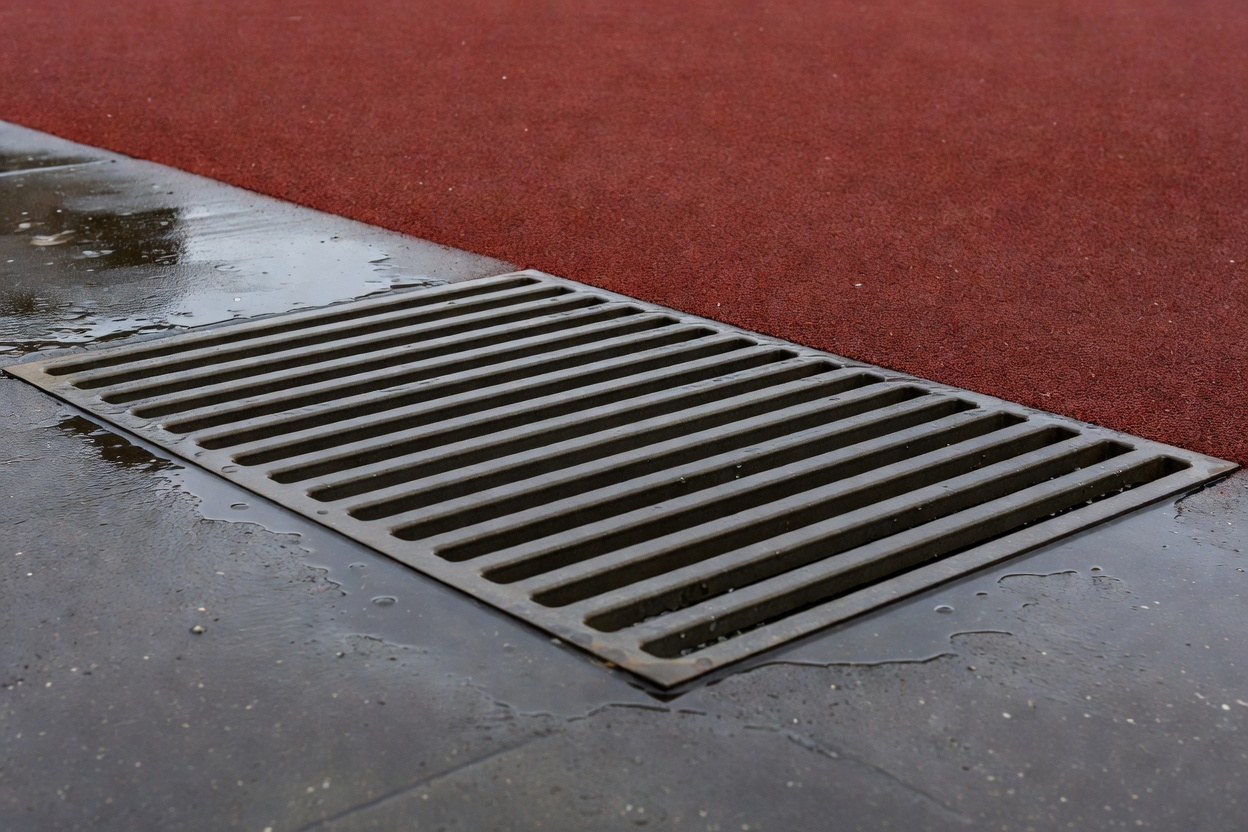
Close view of a metal drainage grate set into wet concrete hardstanding beside a sports surface

02

Drainage Inspection & Surveying

Walking the site, lifting what can safely be lifted, and writing down what is actually there. Visual inspection builds the record that later maintenance decisions depend on.

  • Visual inspection of channels and gullies
  • Blockage indicators and standing water
  • Access points and existing infrastructure
  • Written inspection documentation
Drainage Inspection & Surveying
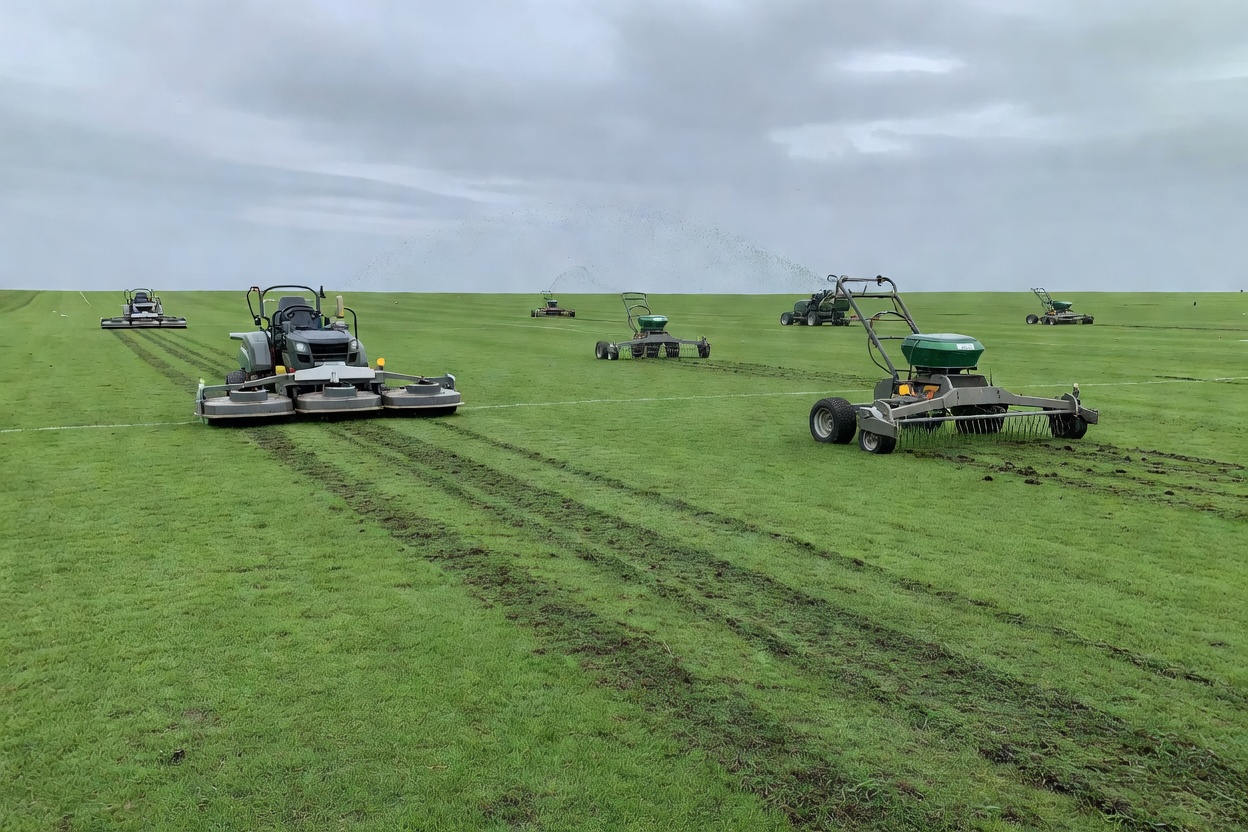
Grounds maintenance equipment working across a large grass sports pitch in overcast daylight

03

Stadium Drainage Maintenance

The routine that keeps small problems small. Seasonal checks, channel care and maintenance windows planned around the fixture list rather than fighting against it.

  • Preventive maintenance scheduling
  • Drainage-channel and debris care
  • Seasonal checks and rain-period reviews
  • Maintenance records for venue operations
Stadium Drainage Maintenance
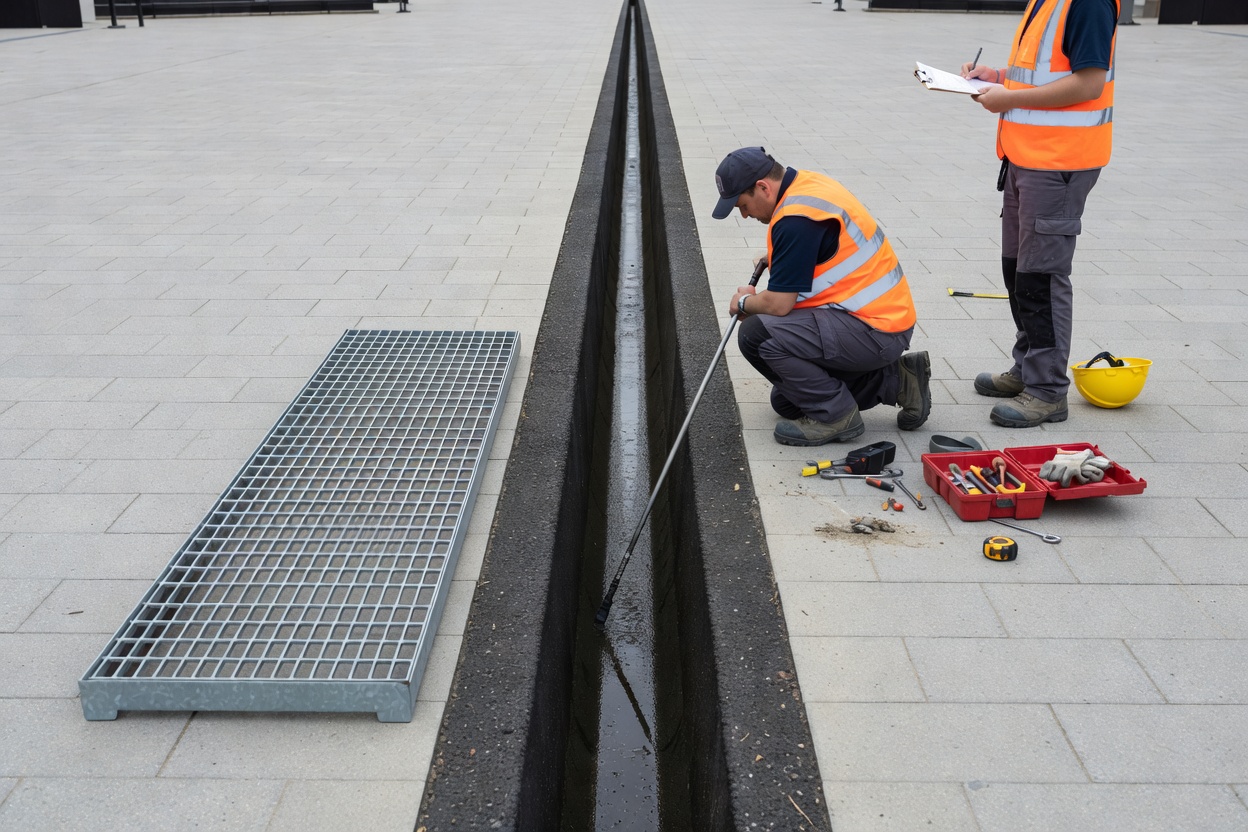
Open linear drainage channel with removed cover section during a maintenance visit on a paved venue area

04

Drainage Cleaning & Repair

When something is blocked, cracked or sitting under water, the question is what to do first. We help identify the problem, coordinate cleaning and plan repairs in a sensible order.

  • Blockage assessment and sediment review
  • Cleaning coordination with qualified contractors
  • Damaged covers, grates and channel repairs
  • Return-to-service checks and documentation
Drainage Cleaning & Repair
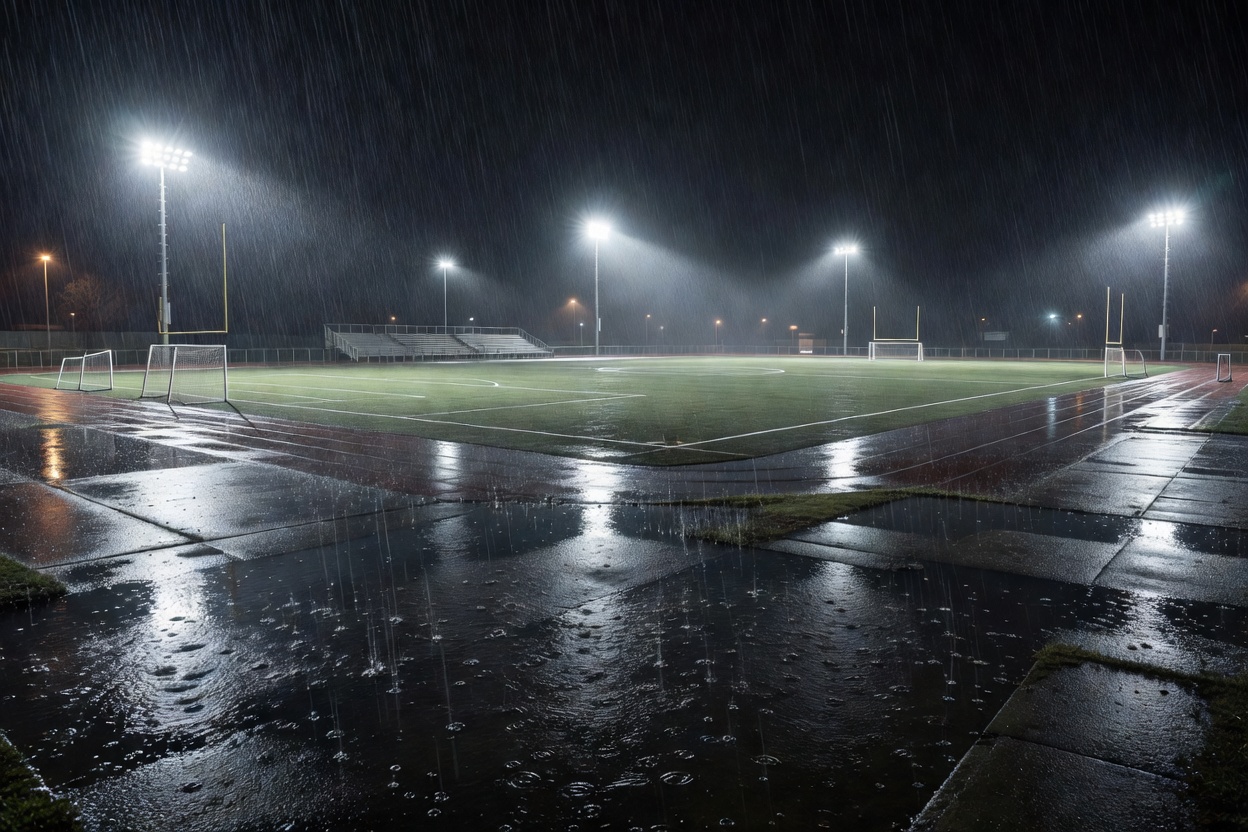
Heavy rain falling across an empty floodlit sports ground with water pooling on the surrounding surface

05

Sports Venue Water Management

The wider picture: how rainfall moves across every zone of a venue, which areas matter most on an event day, and how drainage sits inside broader site planning.

  • Heavy-rain planning by venue zone
  • Pitch, concourse, parking and access areas
  • Drainage capacity considerations
  • Seasonal planning and team coordination
Sports Venue Water Management

06

Not sure where to start?

Most venues we speak to begin with the same sentence: "water sits in one corner and we don't know why." That is usually an inspection question before it is a design question. Tell us what you are seeing, when it happens and which part of the site it affects, and we will suggest a sensible first step rather than a package.

  • Describe the area and the weather conditions
  • Note how long water stays on the surface
  • Mention any access covers you already know about
Talk to the water control desk

OPERATING RHYTHM

THE WATER CONTROL ROUTINE BEHIND A READY VENUE

Drainage rarely fails suddenly. It degrades quietly — a little sediment, a cracked cover, a gully that nobody has lifted for three seasons. A repeating routine catches that drift. Here is the loop we work to.

  1. 01

    Survey

    Establish what exists. Walk the perimeter, the pitch surround, concourses, service yards and access areas. Record channel types, access points, visible condition and the places where water is reported to linger. Without this, everything afterwards is guesswork.

  2. 02

    Plan

    Turn observations into an order of work. Which items are safety-related, which affect event operations, which can wait for a quieter month. Planning also identifies where a qualified engineer, surveyor or specialist contractor may be appropriate.

  3. 03

    Clear

    Remove what is stopping water moving — leaf litter, silt, wind-blown debris, displaced surfacing material. Clearing is coordinated with suitably equipped contractors and carried out under appropriate site-safety arrangements.

  4. 04

    Maintain

    Set a repeating schedule tied to the venue calendar and the seasons. Autumn leaf fall, winter rainfall and pre-season works all shift what needs attention, so the schedule should shift with them.

  5. 05

    Review

    Compare this season's observations with the last. Recurring issues in the same location usually point at something structural rather than something seasonal, and that changes the recommendation.

Drainage condition

Recorded as a qualitative rating during inspection.

Water-flow observations

Observed during and shortly after rainfall.

Maintenance priority

Ranked with the venue team, not scored automatically.

Seasonal readiness

Reviewed before high-rainfall periods.

Documentation

Written notes, photographs and a location reference.

These indicators are visual design elements illustrating the categories we record. They are not live data, measurements or performance statistics.

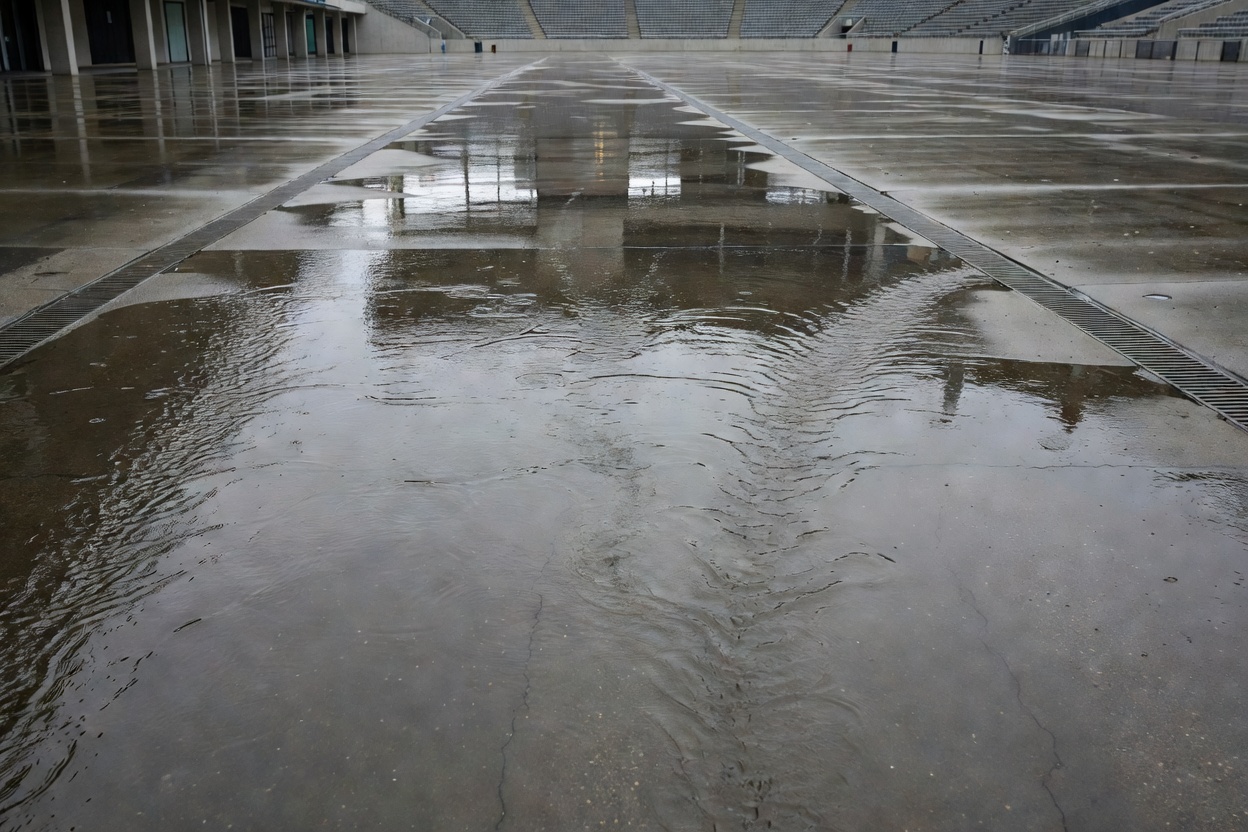
Wide concrete stadium concourse after rainfall with visible surface water running towards edge drainage

WHY IT MATTERS

Water control protects far more than the pitch

It is easy to think of stadium drainage as a pitch issue. In practice, the pitch is often the best-drained part of the site. The awkward areas tend to be the ones nobody photographs: the service yard behind the west stand, the ramp down to the delivery bay, the stretch of paving where two surfaces meet at slightly different levels.

Those areas carry people, vehicles and equipment. Standing water there affects safety, access and the condition of the surfacing itself. Over time, water that is not moving finds somewhere else to go — often into joints, sub-base material or structures that were never intended to hold it.

Good drainage work is mostly about attention: knowing where the water goes, noticing when that changes, and acting before the change becomes expensive. It cannot control the weather, and it cannot promise a dry site in every storm, but it does put a venue in a far better position to respond.

Read about venue water management

SCOPE & HONESTY

What we do, and what we do not claim

Where we are useful

  • Understanding an existing drainage layout that has no current records
  • Setting up a repeatable inspection and maintenance routine
  • Prioritising a backlog of drainage issues across a large site
  • Coordinating cleaning and repair works around an event calendar
  • Preparing questions and context before engaging a design engineer

Where other specialists are needed

  • Structural, civil or hydraulic design calculations
  • Regulatory approvals, consents and statutory submissions
  • Confined-space entry, excavation and high-pressure operations
  • Anything requiring a formally certified engineering signature
  • Work governed by manufacturer documentation for proprietary systems

Requirements vary by project. Site conditions should be assessed, applicable local requirements should be checked, and a qualified professional may be appropriate.

NEXT STEP

Start with what you can see

You do not need drawings, records or a technical brief to open a conversation. A description of where water sits, how long it stays and what the surface is made of is a genuinely useful starting point.