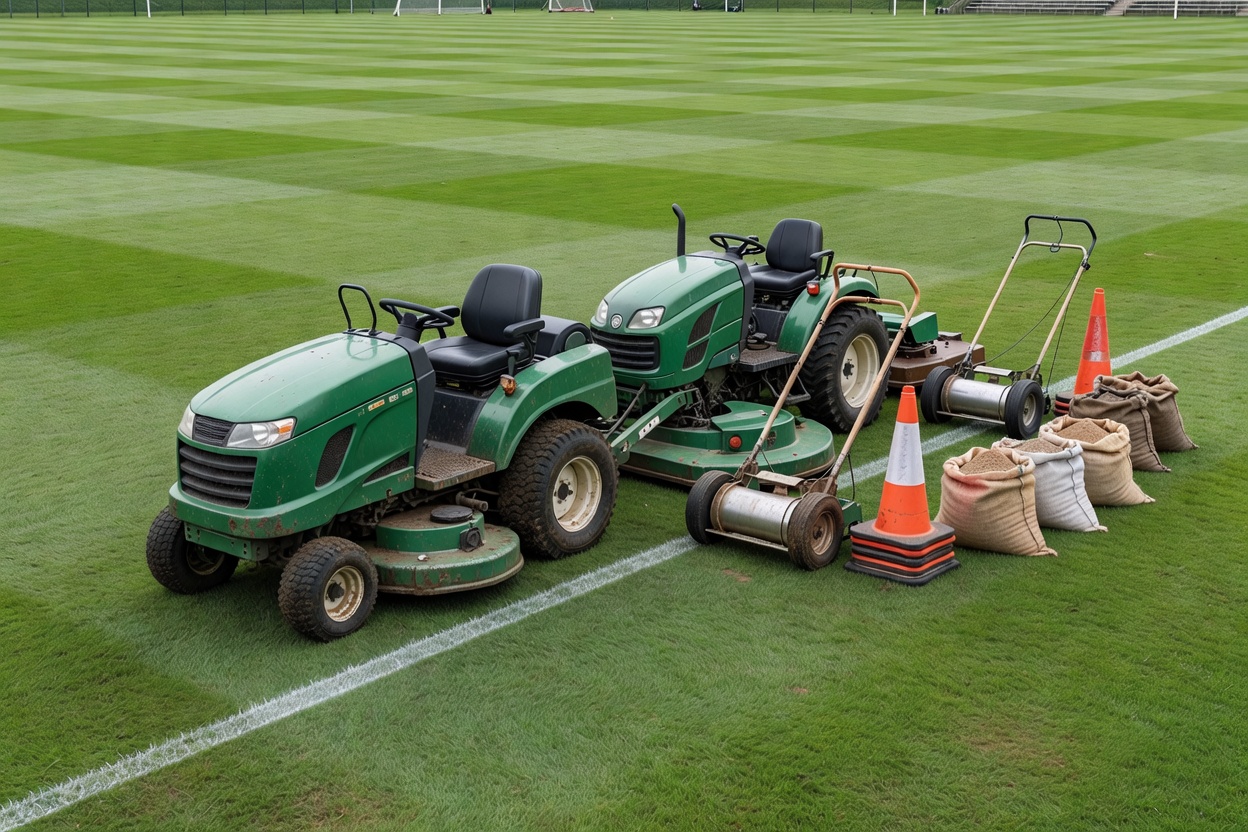
Stadium Drainage Maintenance
Inspection findings feed directly into a repeating maintenance schedule built around the venue calendar.
Stadium Drainage MaintenanceSERVICE 02 — OBSERVATION & RECORD
An inspection is not a dramatic piece of work. It is somebody walking a site slowly, in the right weather, writing down what they see and photographing it in a way that will still make sense next year. That modest activity is the foundation of every sensible drainage decision a venue makes afterwards.
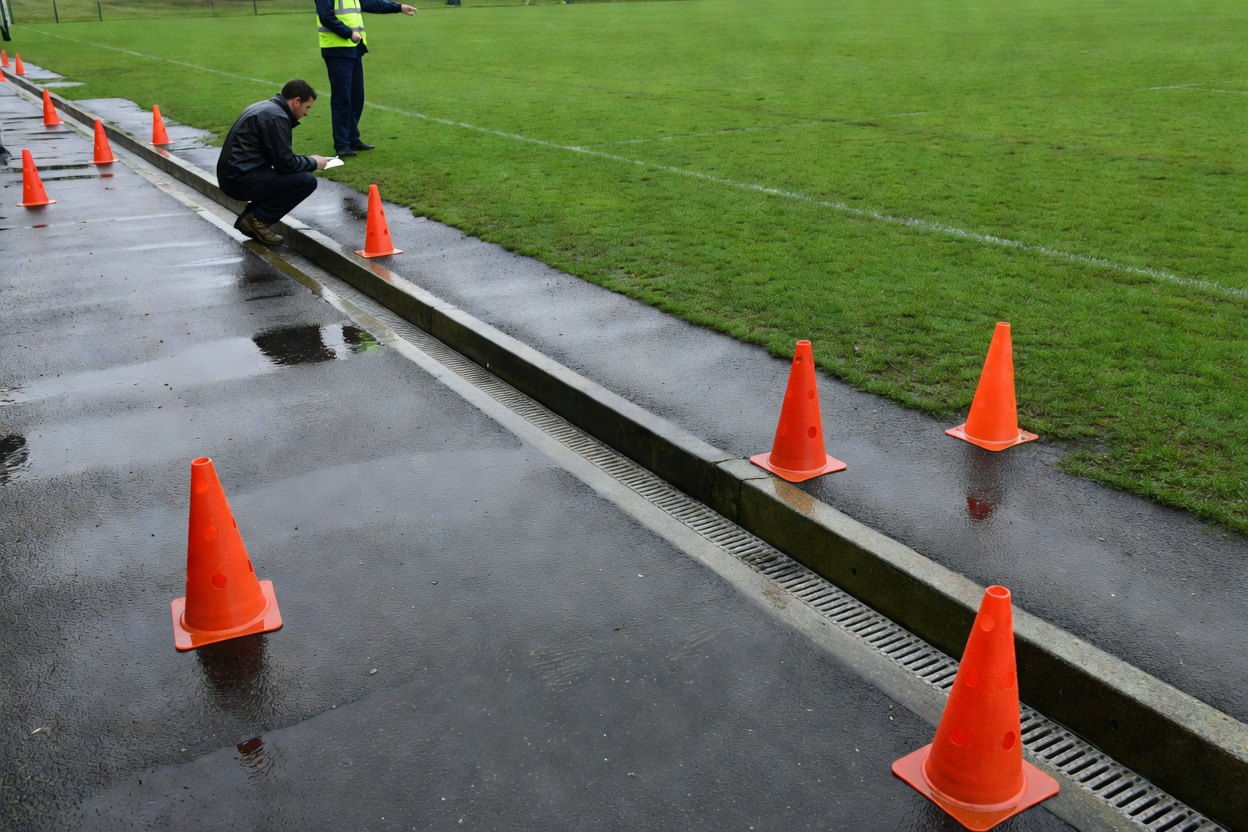
Venue teams usually already know where the problem areas are. What they often lack is a structured record: which drainage elements exist, where the access points are, what condition each one is in, and whether the issue in the north-east corner is the same issue that was noted two winters ago. Inspection converts local knowledge into something transferable, so that it survives staff changes and contractor changes.
It also changes the quality of every quote a venue receives. A contractor working from a clear condition record prices the actual job. A contractor working from "there's a blockage somewhere near the away end" prices the uncertainty.
We locate and record the access points that can be safely opened, note their type and condition, and log those that are obstructed, seized or buried. Access points that cannot be opened are just as important to record as those that can — they define the limits of what any future maintenance can reach.
Linear channels around a pitch perimeter, gullies in concourses, and gratings in service areas each fail in characteristic ways. We note cracked or displaced cover sections, corrosion, movement at joints, damaged seating edges, and sections where the surrounding surfacing has settled away from the channel line.
Where does water actually go? Inspection in dry weather tells you about condition; inspection during or shortly after rainfall tells you about behaviour. Slow drainage, water travelling across a surface instead of into a channel, and water reappearing at a low point are all observations worth capturing at the time.
Standing water long after rain has stopped, sediment lines on surfaces, silt visible in a chamber, odours, debris caught at grate openings, and vegetation growing from a channel are all indicators worth recording. Indicators suggest where to look further; they do not confirm the cause on their own.
Sand from a pitch, grit from winter treatment, rubber granulate from a synthetic surface and general wind-blown material all end up in the same places. Noting the type of sediment often points directly at its source, which is more useful than simply noting that sediment exists.
There is no universal schedule. A venue with mature trees along one boundary needs a different autumn routine to a city-centre site with none. As a general approach, many venues find it workable to inspect before the main rainfall season, again after peak leaf fall, and once more before the busiest part of the fixture calendar — with additional checks after unusually heavy weather. Requirements vary by project and site conditions should be assessed.
Visual inspection cannot identify every underground problem. A pipe can be displaced, root-intruded, partially collapsed or disconnected in a way that produces no visible surface symptom until conditions become severe. Where the surface evidence suggests something below ground, further investigation by suitably equipped specialists — including camera survey or other methods appropriate to the installation — may be the right next step.
We are clear about this boundary in every report. An inspection tells you what can be observed, and it flags where observation is not enough.
A drainage record only earns its keep if someone can use it later. We aim for: a consistent location reference so an item can be found again, a short condition note in plain language, dated photographs, the weather at the time of inspection, and a clear statement of anything that could not be accessed.
Comparability matters more than volume. Two inspections written the same way, a season apart, reveal trends that a single very detailed report cannot.
Most inspections generate more findings than a venue can address at once. Prioritisation usually balances safety implications, effect on event operations, risk of the issue worsening, and whether the work can be done in an available window. Items affecting pedestrian routes and emergency access generally rise to the top; cosmetic issues on a rarely used service path generally do not.
RELATED SERVICES
Inspection findings feed directly into a repeating maintenance schedule built around the venue calendar.
Stadium Drainage Maintenance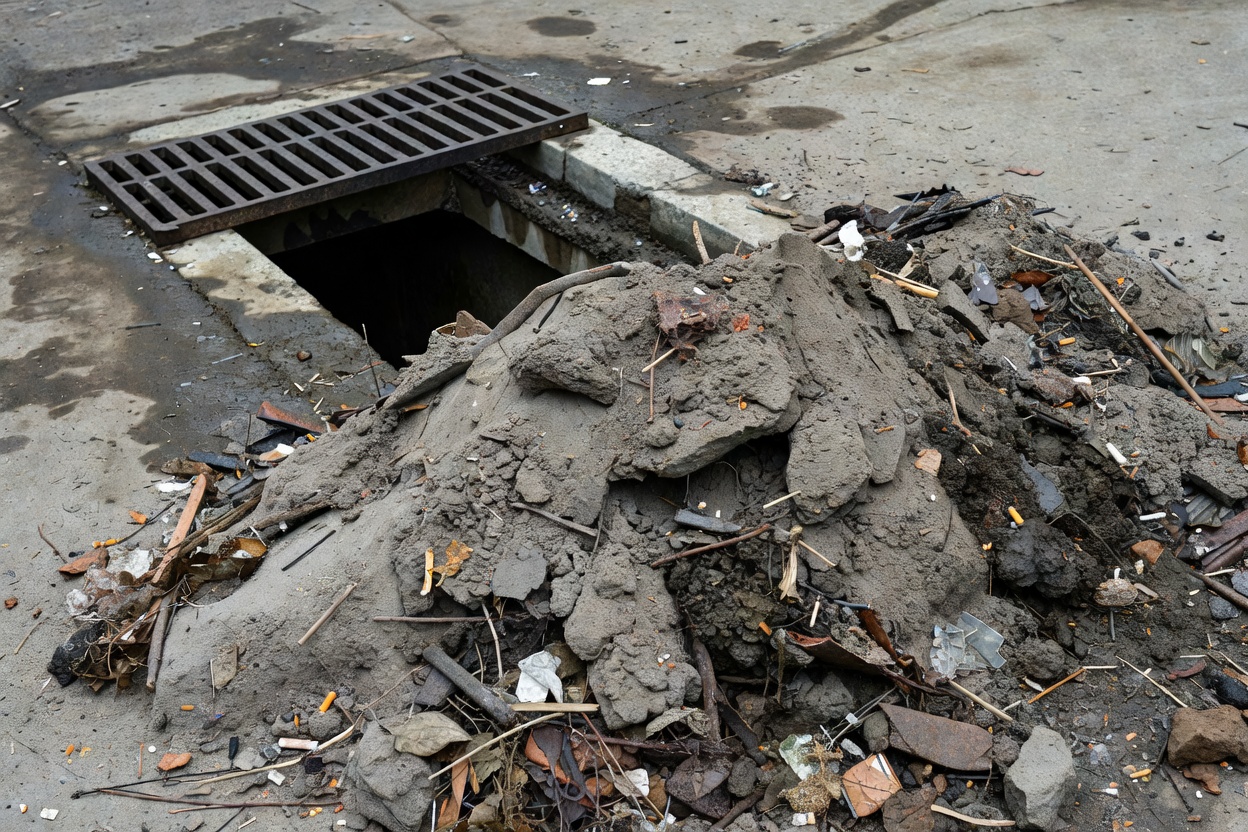
Where inspection identifies blockages or damaged components, cleaning and repair planning is the next stage.
Drainage Cleaning & RepairTell us the size of the site, the areas that concern you and the windows when access is possible. We will suggest a scope that fits the time available.