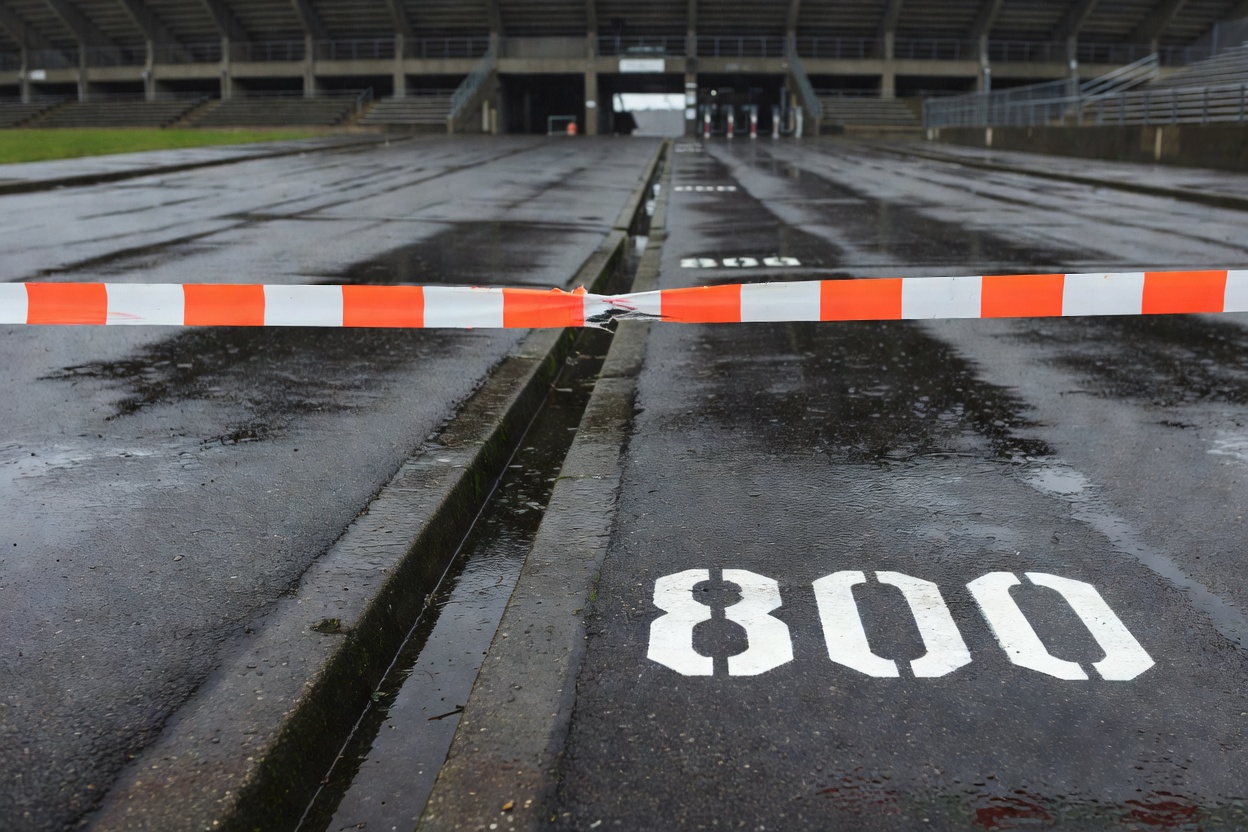
Drainage Inspection & Surveying
A clear inspection record makes repair scoping faster and more accurate, and reduces surprises on site.
Drainage Inspection & SurveyingSERVICE 04 — CORRECTIVE WORK
Something is blocked, cracked, sunken or under water, and it needs sorting before the next event. This page explains how we help venues assess what is actually wrong, decide the order of work, coordinate suitably qualified contractors, and confirm the result afterwards.
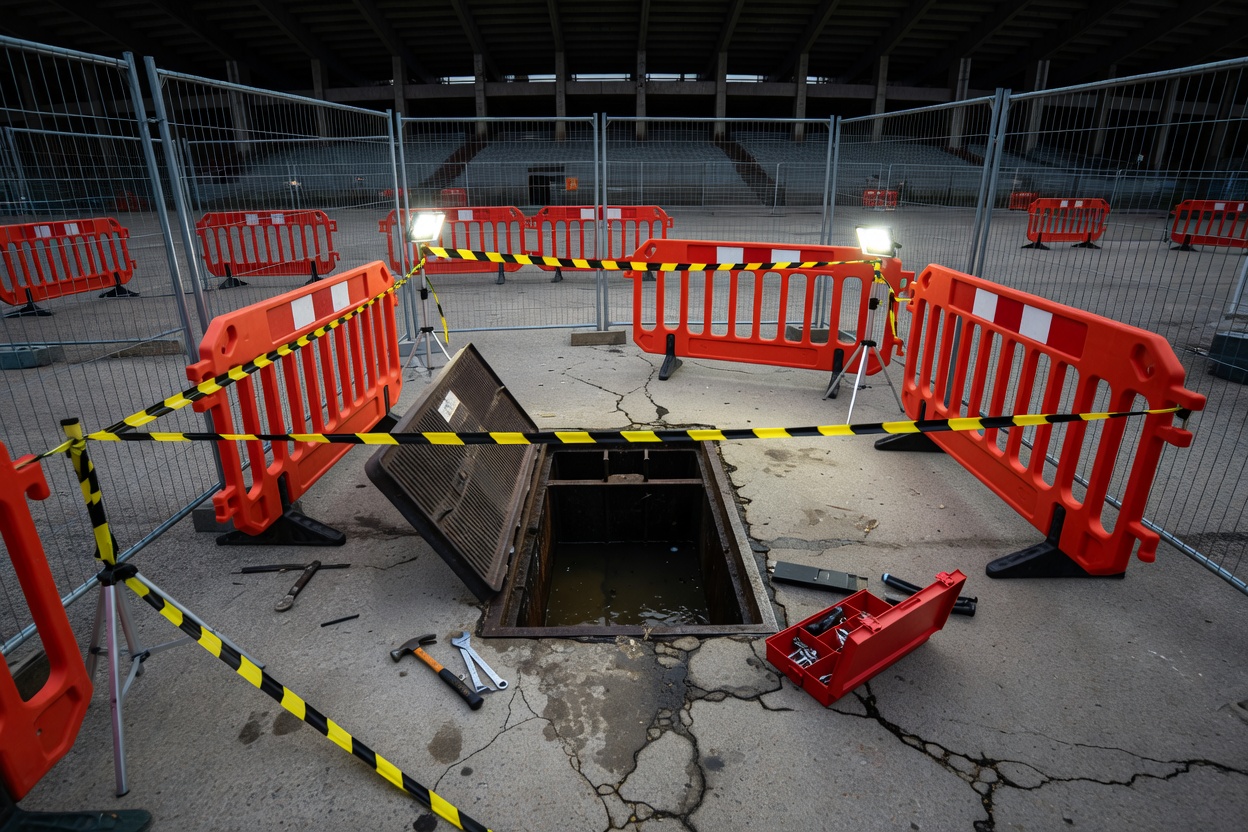
The instinct when a drain backs up is to clear it immediately. Sometimes that is right. Often it treats the symptom while the cause stays in place, and the same call comes again six weeks later. Before arranging works we try to establish three things: what the obstruction appears to be, where in the run it sits, and why that location is collecting material in the first place.
The answer changes the job entirely. Leaf litter at a grate is a housekeeping matter. Fine sand consistently settling at the same point suggests a fall or velocity issue. Roots or displaced sections suggest something structural that cleaning will not resolve.
Sports venues generate distinctive debris. Rootzone sand, synthetic-surface infill, winter grit, catering waste, wind-blown litter, construction dust from adjacent works, and organic matter from landscaping all behave differently in a drainage system. Identifying the material usually identifies the source, and controlling the source is more durable than repeating the clean.
Drain cleaning at a large venue is a coordinated operation, not a single task. It involves access arrangements, equipment suited to the installation, arrangements for removed material, route closures and appropriate site-safety controls. Our role is to define the scope clearly, brief the contractor with the inspection record, and make sure the venue knows what will be inaccessible and when.
Cleaning operations should be carried out by suitably trained and equipped personnel working under appropriate safety arrangements and risk assessments. This site does not provide procedures or instructions for confined-space entry, excavation, pressurised cleaning equipment, electrical systems or heavy plant. Those activities carry serious hazards and must be planned and executed by qualified specialists in accordance with applicable local requirements.
Linear channels fail at their weakest points: joints, ends, and the interface with the surrounding surfacing. Cracked sections, settlement alongside the channel line, and edges that have lifted under vehicle loading are common. Repair options range from replacing an individual unit to reinstating the surrounding surfacing so that water reaches the channel properly again.
Covers are consumable items in a venue environment. They get driven over, levered, impacted by equipment and occasionally removed and not replaced. A damaged or missing cover is both a drainage issue and a safety issue, so it usually jumps the priority queue. Replacement components should match the loading class and configuration of the installation, and manufacturer documentation should be reviewed.
Chambers that are seized, buried under new surfacing, or damaged around the frame need attention even when the drainage itself is performing. If a system cannot be accessed, it cannot be maintained, and the next problem will be harder and more expensive.
Few venues can address every finding at once. A workable prioritisation usually considers: immediate safety implications, effect on spectator and vehicle routes, likelihood of rapid deterioration, whether the item affects a larger downstream run, and whether the works can fit an available access window.
It is also worth grouping geographically. Three modest repairs in the same service yard are almost always cheaper and less disruptive done together than spread across three separate visits.
Cleaning and repair frequently require part of a site to be closed. Barriers, signage, alternative pedestrian routes and vehicle diversions should be agreed with the venue's safety team before works begin. For venues with events in the same period, it is worth confirming in writing what will be reinstated by which time, and what the fallback arrangement is if the works overrun.
A repair is not complete when the tools are packed away. We recommend a return-to-service check that confirms the surface has been reinstated correctly, covers sit flush and secure, the area is clear of material, and — where it can be observed safely — water now moves as intended. A check during or after rainfall is the most informative version of this.
Documentation should capture what was found, what was done, what components were used, any deviation from the original scope, and anything deliberately deferred. Deferred items are the ones most likely to be forgotten, so they belong in the record explicitly.
Well-planned corrective work restores function, reduces safety risk and often reveals useful information about the wider system. Its limitation is that it is bounded by what can be reached and observed. Underground defects outside the repaired section may remain, and clearing a blockage does not increase the inherent capacity of a system. Where recurrence continues after repair, a broader investigation is usually the right response.
RELATED SERVICES
A clear inspection record makes repair scoping faster and more accurate, and reduces surprises on site.
Drainage Inspection & Surveying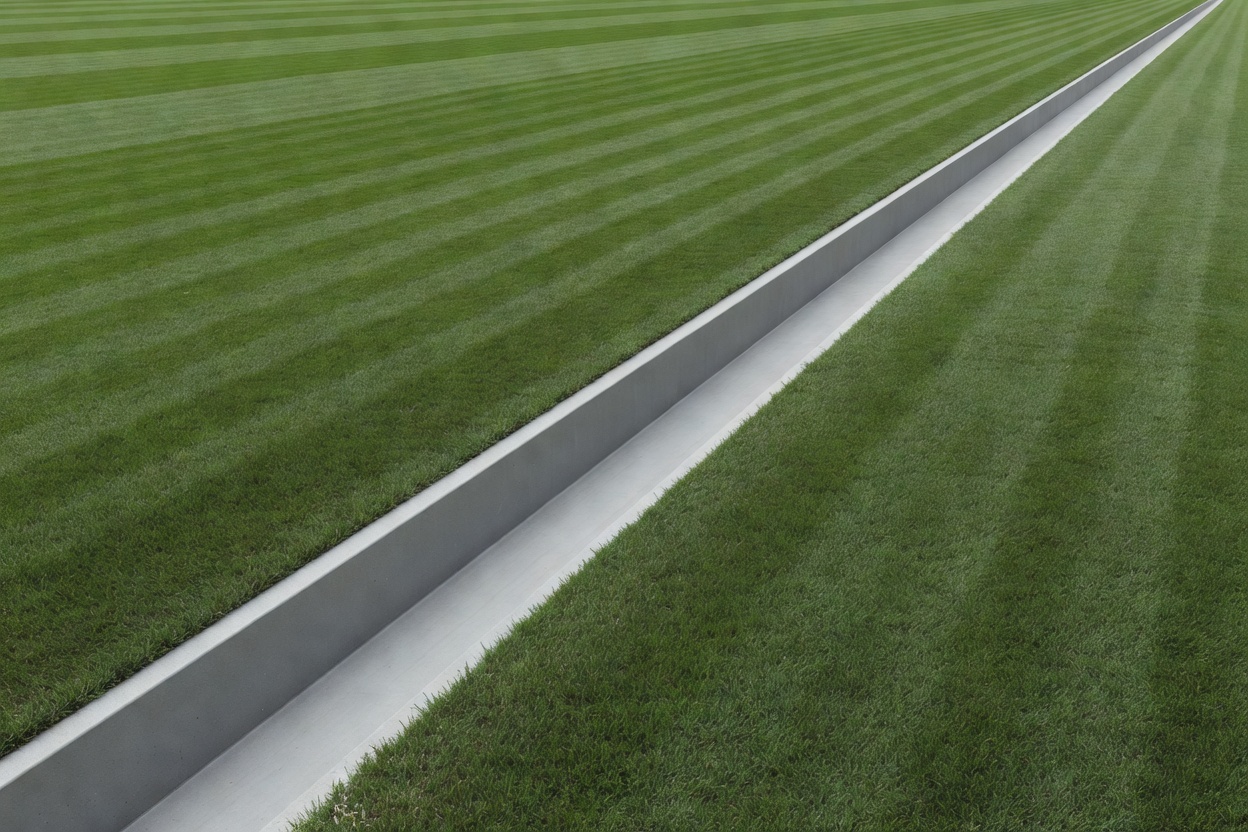
After corrective work, a planned routine is what keeps the same issue from returning next season.
Stadium Drainage MaintenanceLocation, surface type, how long water sits and what the weather has been doing. That is usually enough for a useful first conversation about scope.