Drainage Cleaning & Repair
When maintenance uncovers damage or a stubborn blockage, planned cleaning and repair takes over.
Drainage Cleaning & RepairSERVICE 03 — THE REPEATING LOOP
Maintenance is the least exciting and most valuable part of drainage work. Nothing dramatic happens when it goes well, which is exactly the point. This page is about building a routine that fits around a fixture list, a grounds team and a budget — rather than one that exists only on paper.
Reactive maintenance begins when somebody notices water where it should not be. By that point the conditions have usually been developing for a while, the weather is rarely convenient, and the venue often has an event in the next few days. Options narrow, costs rise, and the work happens under time pressure.
Preventive maintenance begins on a date chosen in advance, in a window the venue controls. The same channel gets cleared, but calmly, with the right equipment booked and no one standing over the crew asking when the gate can reopen. It is the same task with an entirely different risk profile.
Preventive work does not eliminate reactive work. Storms, blockages and component failures still happen. It reduces how often the venue is forced into reacting, and it usually means the reactive job is smaller when it comes.
A generic quarterly plan tends to collide with the busiest weeks of the season. We prefer to lay the maintenance tasks over the venue's actual calendar and find the genuine windows: international breaks, close-season periods, the gap after a concert derig, the weeks when the pitch is already closed for renovation.
Drainage demands are not evenly distributed through the year. Attention before and during high-rainfall periods produces more benefit than the same effort in a dry month. Many venues front-load work into late summer and early autumn for this reason.
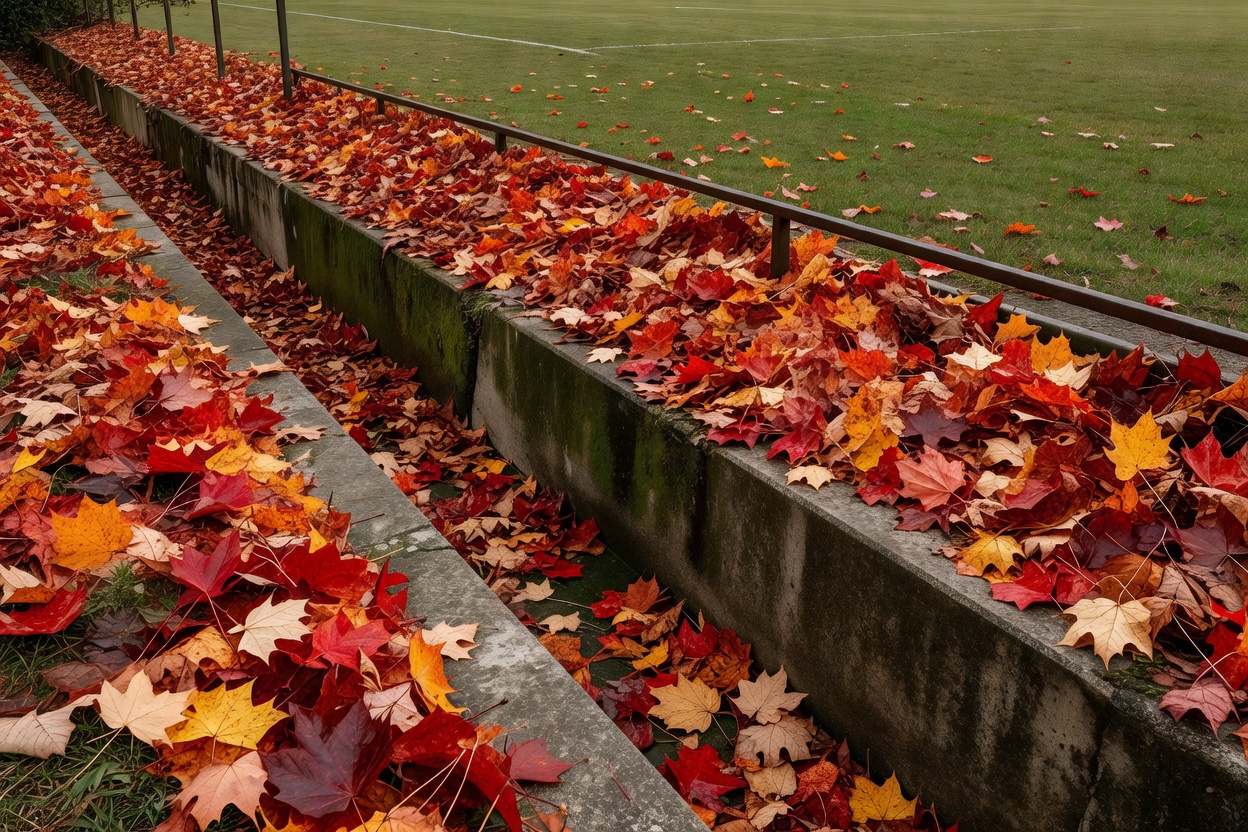
If the site has trees anywhere near a drainage route, autumn will dominate the maintenance year. Grates blind over quickly, and a channel that was clear in September can be effectively closed by late October. A short, frequent clearing routine during those weeks often outperforms one large visit.
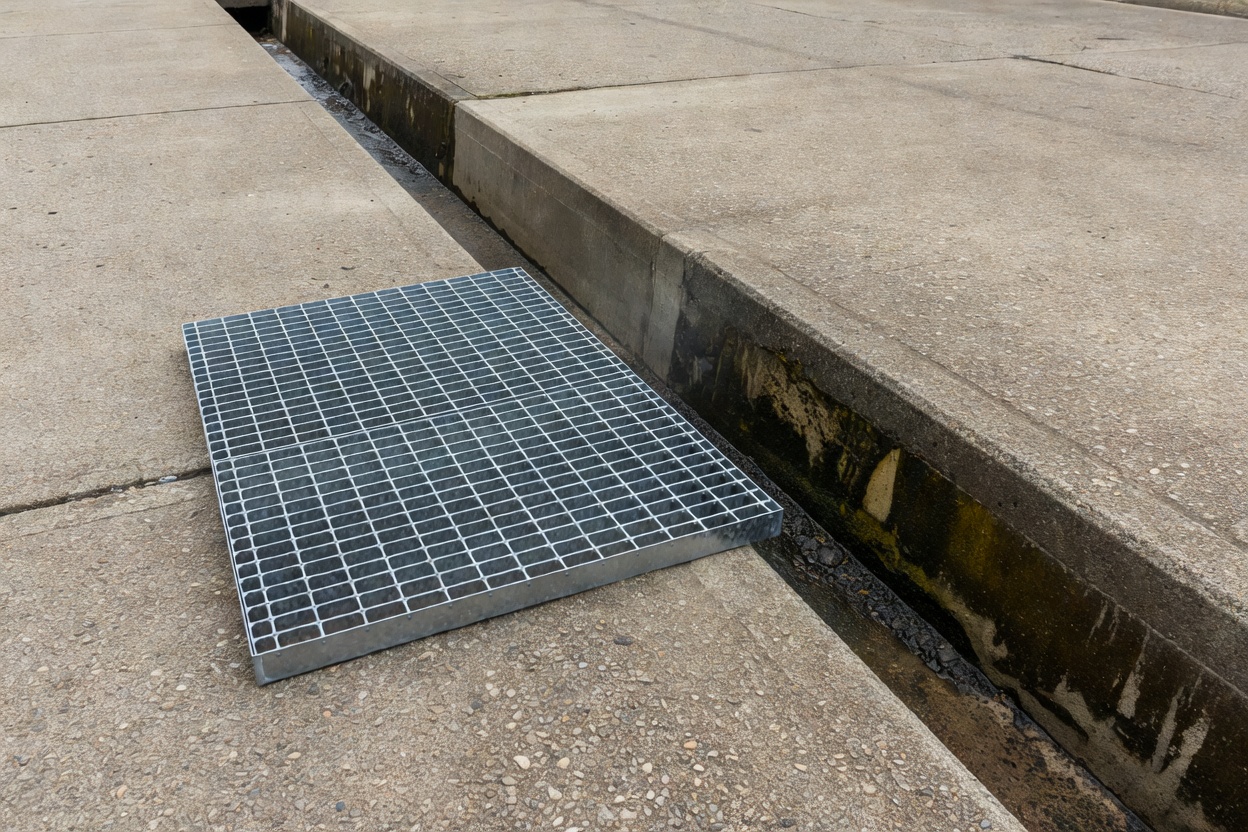
Removing accumulated material from channels and gullies, checking that cover sections sit correctly, and noting any movement at joints or edges. Channels around pitch perimeters also take mechanical damage from equipment and vehicles, so a visual check of the covers is part of every visit.
Managing debris at source is usually cheaper than removing it from the system. That might mean adjusting where litter bins sit, changing a sweeping route, reviewing how pitch maintenance arisings are handled, or altering a landscaping regime near a collection point.
Covers should be checked for condition and for whether they can still be opened. A seized or buried access point is a future problem in slow motion — the day it is needed urgently is the worst day to discover it cannot be lifted.
Every maintenance visit is also an opportunity to observe. Where did water sit after the last heavy rain? Has a new low point appeared? Did a recently resurfaced area change how water moves? These notes cost nothing to record and are frequently the earliest warning of a developing issue.
A maintenance record has two jobs: proving what was done, and revealing patterns. The second is where the value sits. If the same gully is cleared four times a year while its neighbours need one visit, something is different about that location — a fall issue, a connection issue, a source of sediment, or a partially obstructed run downstream.
We encourage tracking findings against fixed location references so that recurrence is visible at a glance. When a pattern appears, the right response is usually investigation rather than more frequent clearing.
Drainage maintenance touches safety teams, grounds teams, event operations, security and sometimes catering logistics. Works may need route closures, vehicle access, or temporary storage for removed material. Agreeing those details in advance turns a potentially disruptive visit into a routine one.
It also helps to agree in advance who makes the call if something unexpected is found mid-visit — a damaged chamber, an unrecorded connection, or an area that cannot safely be worked on that day.
A planned routine gives budget predictability, a clear record, fewer emergency call-outs and better information for future decisions. What it cannot do is guarantee that surface water never appears. Extreme rainfall, upstream changes, hidden below-ground defects and one-off incidents all sit outside the reach of a maintenance schedule. Maintenance improves the odds; it does not remove weather-related risk.
RELATED SERVICES
When maintenance uncovers damage or a stubborn blockage, planned cleaning and repair takes over.
Drainage Cleaning & Repair
A maintenance plan needs an accurate inventory. Inspection establishes and refreshes that baseline.
Drainage Inspection & SurveyingIf your drainage tasks currently live in three inboxes and one person's memory, a written seasonal plan is usually the quickest improvement available.